At Skinfinity, we usually call it PRP treatment. Patients often search for "vampire facial", so that is the term I am using here.
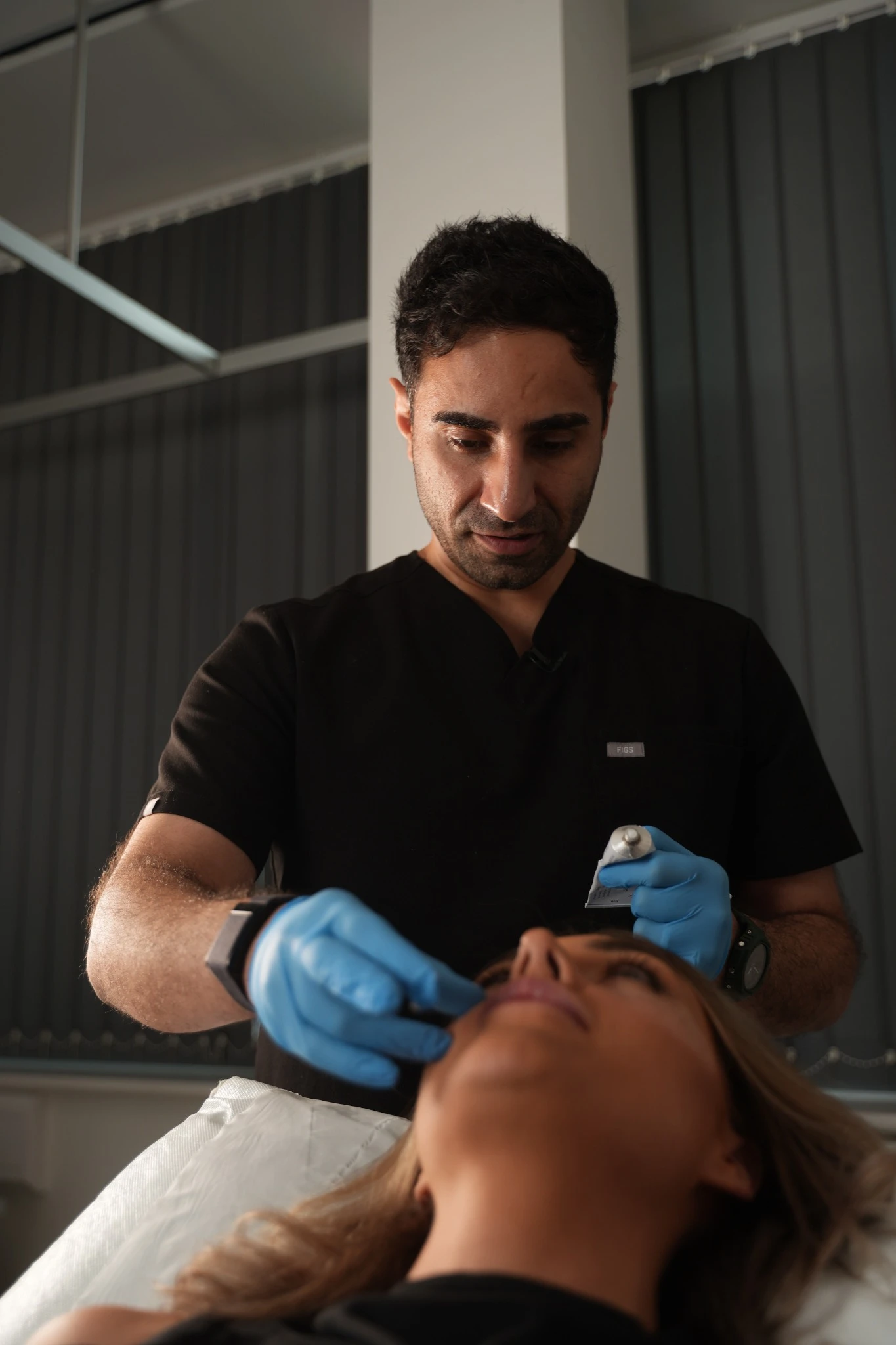
I'm Dr Mahmoon Rashid, and I carry out PRP facials at Skinfinity in Leeds. This guide explains what the treatment does, what it does not do, what it costs, and how to decide whether it is right for your skin.
What is a vampire facial?
A vampire facial is microneedling combined with platelet-rich plasma, also known as PRP.
The appointment involves:
- Taking a small blood sample from your arm
- Spinning the sample in a centrifuge for around ten minutes
- Separating the platelet-rich plasma
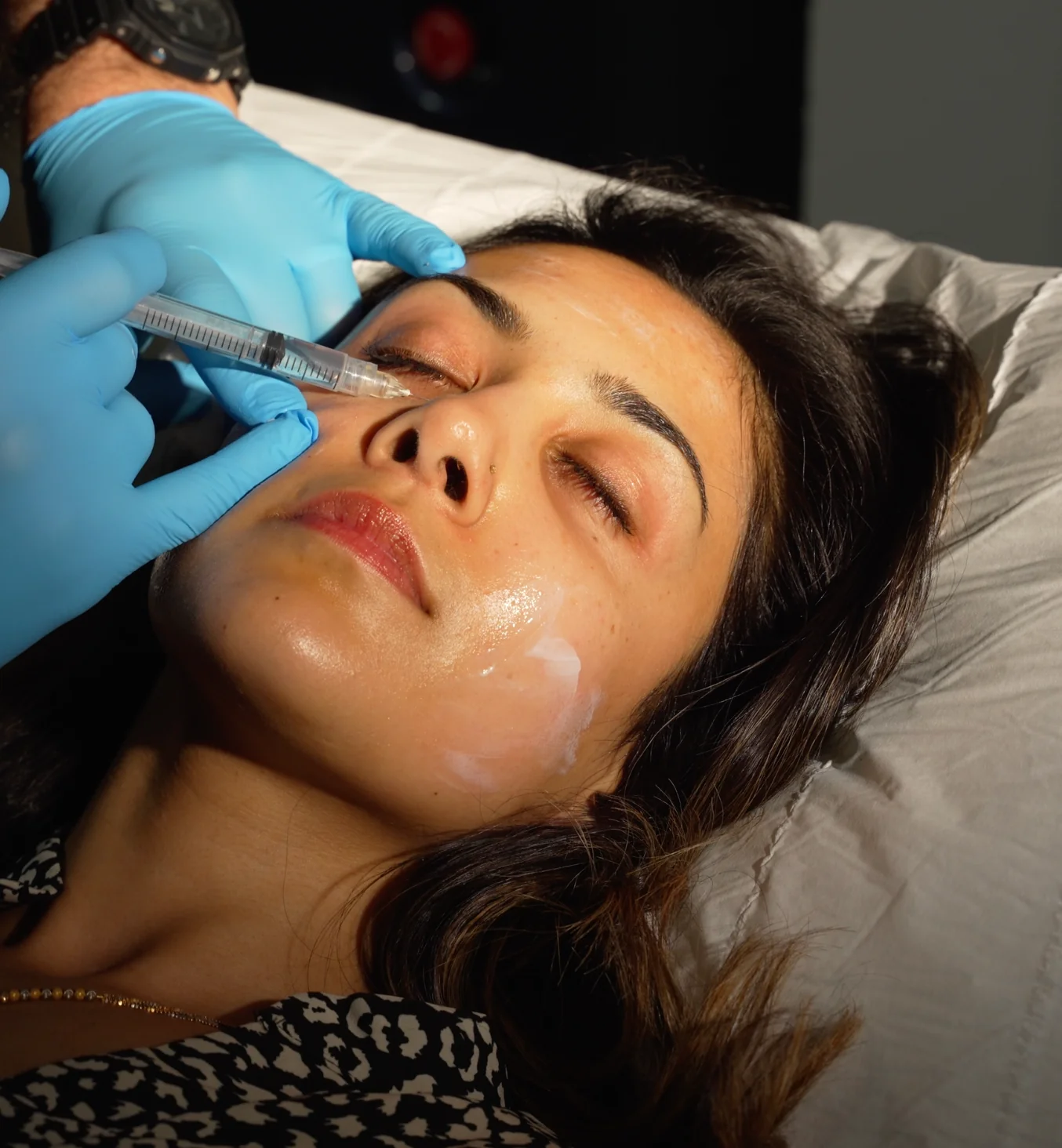
- Numbing the face
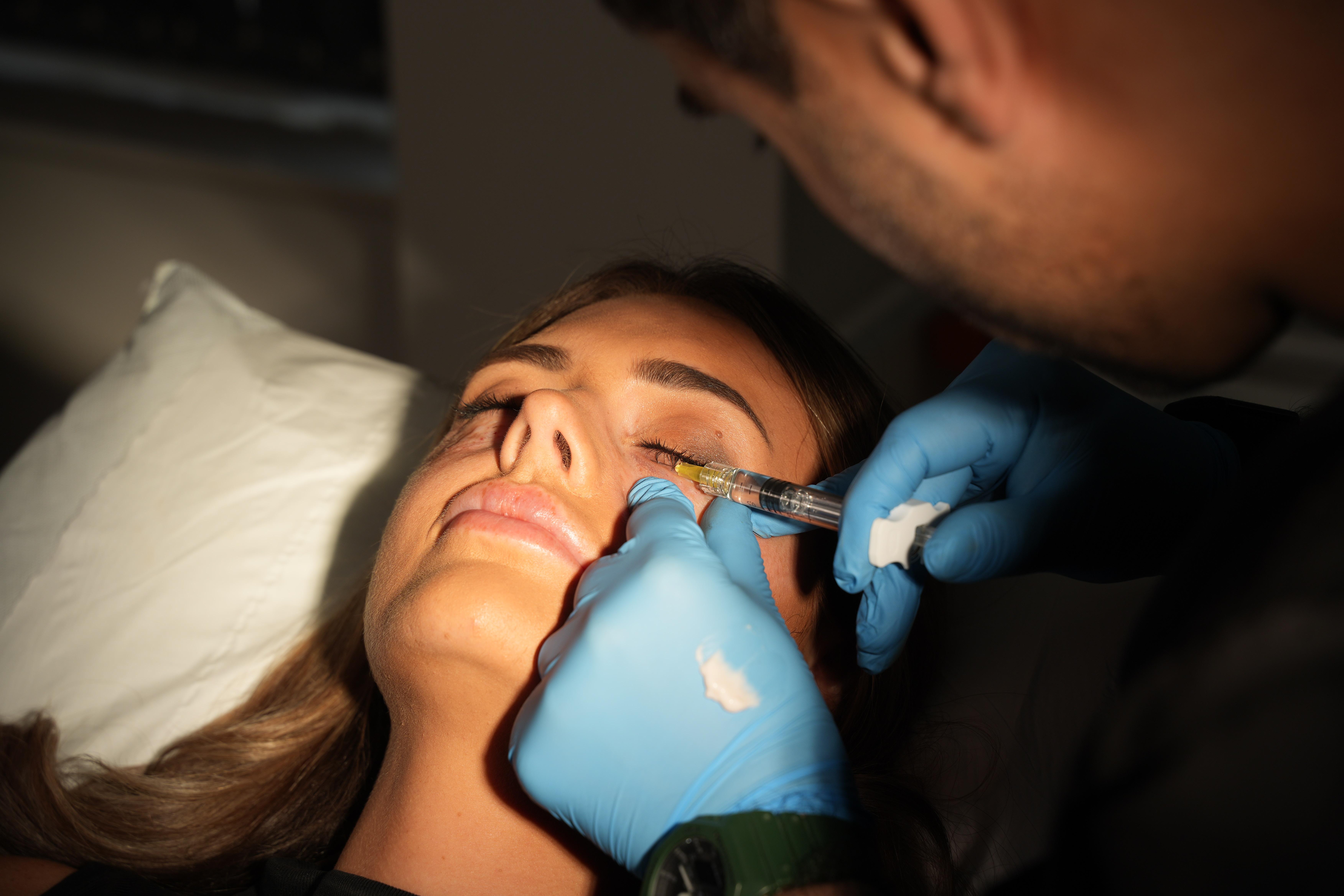
- Using microneedling to create tiny channels in the skin
- Applying the plasma to the skin during treatment
- Injecting small amounts just beneath the surface in selected areas, where appropriate
Microneedling creates a controlled injury in the skin. That prompts the skin to repair itself. The platelet-rich plasma appears to support that repair process, because platelets contain growth factors.
That is the aim of the treatment: to encourage your skin to renew itself in a controlled, safe and gradual way.
What does a PRP facial improve?
A PRP facial is mainly used to improve skin quality.
It can help with:
- Dull skin
- Uneven texture
- Roughness
- Fine surface lines
- Mild loss of elasticity
- General tiredness in the skin
- Some shallow acne scarring
It is not a treatment for adding volume or lifting the face.
A 2025 systematic review of platelet treatments for facial rejuvenation found consistent improvement in skin texture and elasticity across the studies, with the strongest results when PRP was combined with microneedling.
In clinic, patients usually describe their skin as looking fresher, brighter and smoother. Make-up often sits better. Fine surface lines may soften. Some acne scarring may improve over a course, although deeper scarring usually needs a different or more intensive plan.
The results build gradually. This is not an instant treatment.
What a PRP facial will not do
This is just as important as what it can do.
A PRP facial will not:
- Add volume to the face
- Lift sagging skin
- Remove deep lines
- Correct hollowing under the eyes
- Replace lost cheek volume
- Give the same result as injectable treatments
- Replace good skincare or sun protection
If your concern is hollowing, volume loss or a deep frown line, PRP is unlikely to be the right treatment on its own.
If your concern is dullness, texture, tired-looking skin or mild surface ageing, it may be a good option to consider.
The consultation matters because the treatment has to match the problem. Otherwise, you spend money and feel disappointed.
What happens during the appointment?
A PRP facial appointment usually takes around 45 to 60 minutes. This includes 20 to 30 minutes for numbing cream.
The usual steps are:
- We take a small blood sample
- The blood is spun while the numbing cream works
- The skin is cleaned and prepared
- Microneedling is carried out across the face
- PRP is applied during treatment
- Small injections may be used in certain areas, if clinically appropriate
- Aftercare is explained before you leave
Most patients describe the treatment as uncomfortable rather than painful. The microneedling feels like a vibrating scratch. The blood sample is similar to a normal blood test.
Afterwards, the skin will look red, usually like moderate sunburn.
Recovery after a vampire facial
Redness is expected after treatment. For most people:
- Day one looks like sunburn
- Day two is usually pink
- By day three, most people feel comfortable wearing make-up and getting on with their week
Redness usually settles within 24 to 72 hours.
Avoid make-up for the first 24 hours. For the first 48 hours, also avoid:
- Heat
- Alcohol
- Exercise
- Direct sun
- Saunas
- Active skincare
- Harsh exfoliation
I will give you written aftercare on the day, so you know exactly what to do and what to avoid.
How many sessions do you need?
Most patients need a course of three sessions, usually spaced four to six weeks apart.
A single session can give the skin a short-term glow, but the course is what gives the more meaningful change in texture and quality.
Results usually last around 12 to 18 months, depending on your skin, lifestyle and ongoing skincare. A maintenance session can then help to hold the result.
When will you see results?
You may notice a glow within the first week, once the redness settles. The deeper change takes longer.
Skin remodelling happens gradually, so texture and elasticity usually improve over the following two to three months.
This is why I always explain that PRP is not a quick-fix facial. It is a regenerative treatment. The result builds slowly.
How much does a vampire facial cost in Leeds?
At Skinfinity, a PRP facial with microneedling is:
- £450 per session
- £1,200 for a course of three
- £50 for the consultation
Prices for a vampire facial in the UK vary widely, from around £250 to over £600 per session. When comparing prices, ask what is actually included.
Check whether the price includes:
- PRP preparation
- Microneedling
- The amount of plasma used
- Medical assessment
- Aftercare
- Review or follow-up advice
Not all PRP facial treatments are prepared or performed in the same way.
Full prices are listed on the PRP treatment page.
Why have a PRP facial with a doctor?
PRP uses your own blood, which makes it one of the safer treatment options in aesthetics. But the assessment still matters.
Before recommending treatment, I need to consider:
- Your skin type
- Your main concern
- Whether PRP is likely to help
- Whether you have active acne, cold sores or infection
- Whether another treatment would be more suitable
- Whether the result you want is realistic
Sometimes PRP is the right choice. Sometimes it is not.
If another treatment would give you a better result, or save you money, I will tell you.
Frequently asked questions
Does a vampire facial hurt?
Not much. Numbing cream is applied for 20 to 30 minutes first. The microneedling feels like a scratching vibration, and the blood sample feels like a normal blood test. Most patients find the redness afterwards more noticeable than the treatment itself.
How long does redness last after a PRP facial?
Usually 24 to 72 hours. The skin often looks like sunburn on day one. It is usually pink on day two. By day three, most people are wearing make-up and getting on with their week.
Is a vampire facial worth it?
It can be, if your concern is skin quality, dullness or texture. It is less likely to be worth it if your main concern is volume loss, deep lines or facial lifting. Those need a different approach. I will talk this through with you properly at consultation.
Can a PRP facial help acne scars?
It can help improve shallow acne scarring over a course. This is because microneedling and PRP encourage the skin to remodel. Deeper or pitted scars usually need a more detailed treatment plan, and I will tell you if that applies to your skin.
How often should you have a PRP facial?
Most patients start with three sessions, spaced four to six weeks apart. After that, a maintenance session every 12 to 18 months is usually enough for most people.
Who should not have a vampire facial?
A PRP facial is not suitable for everyone. You should not have treatment if you are under 18, pregnant, breastfeeding, living with a clotting disorder, known to have low platelets, experiencing active acne in the treatment area, experiencing cold sores, or experiencing a skin infection on the face. Please also tell me if you take blood thinners before we plan any treatment.
Thinking about a PRP facial?
The most useful part of the consultation is deciding whether this is actually the right treatment for your skin.
If PRP is suitable, we can plan a course. If something else would work better, or would be better value for you, I will explain that too.
You can book online or call 0113 397 0980. Full prices are available on the PRP treatment page, and you can get in touch here if you have a question before booking.
Treatment at Skinfinity is for patients aged 18 and over. This information is general and does not replace an individual consultation.

Dr Mahmoon qualified in medicine at the University of Leeds, has worked as a GP, and practises as an aesthetic clinician with advanced training in regenerative and injectable treatments, with a focus on safe, natural-looking outcomes. He treats at Skinfinity's CQC-registered clinic at 4600 Park Approach, Leeds LS15 8GB, where every treatment is doctor-led.
Meet Dr Mahmoon →Sources
- The Role of Platelet Concentrates and Growth Factors in Facial Rejuvenation: A Systematic Review with Case Series. Medicina, 2025;61(1):84. https://www.mdpi.com/1648-9144/61/1/84
- Skinfinity Clinic Leeds: PRP treatment page, for prices, session spacing and duration.