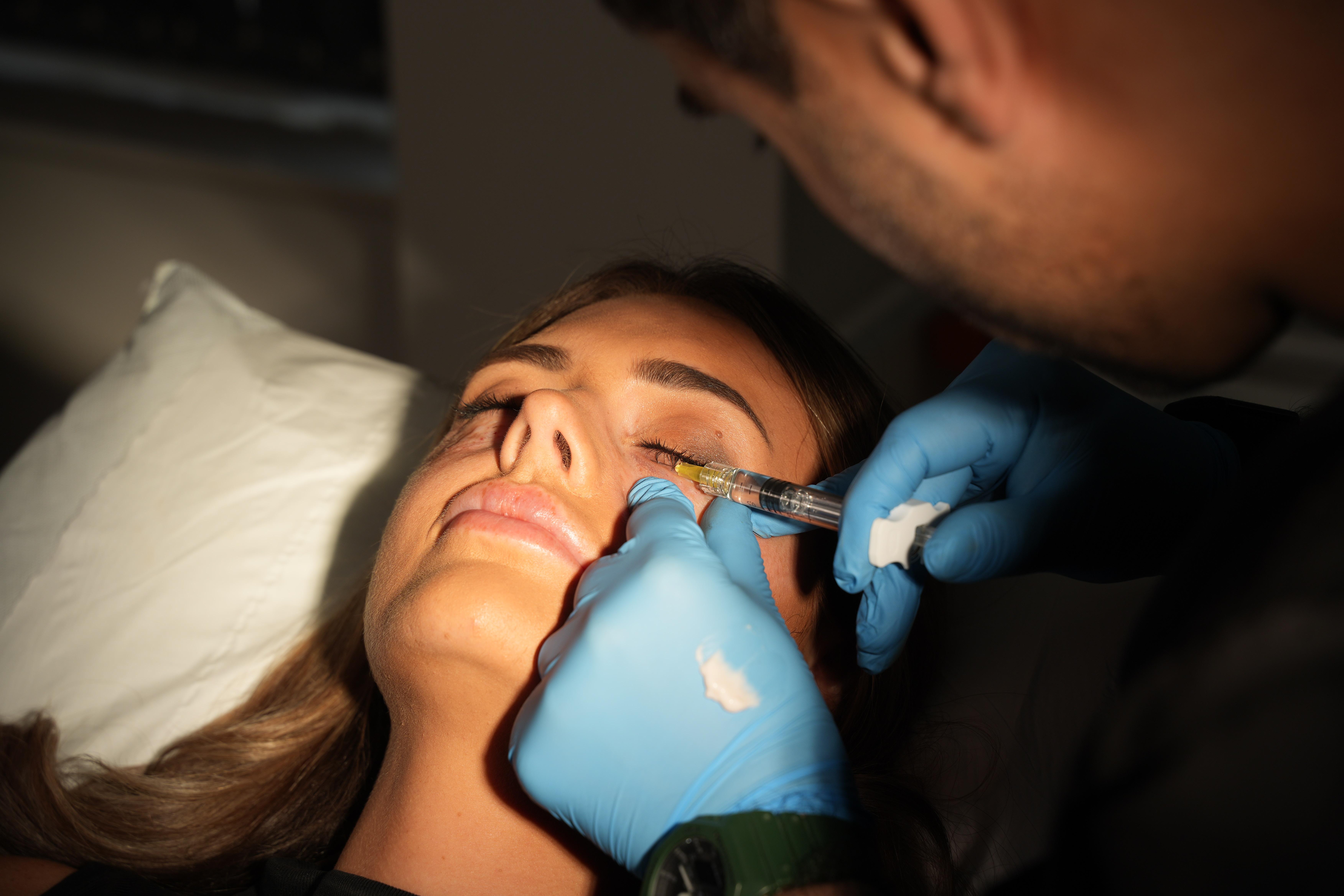
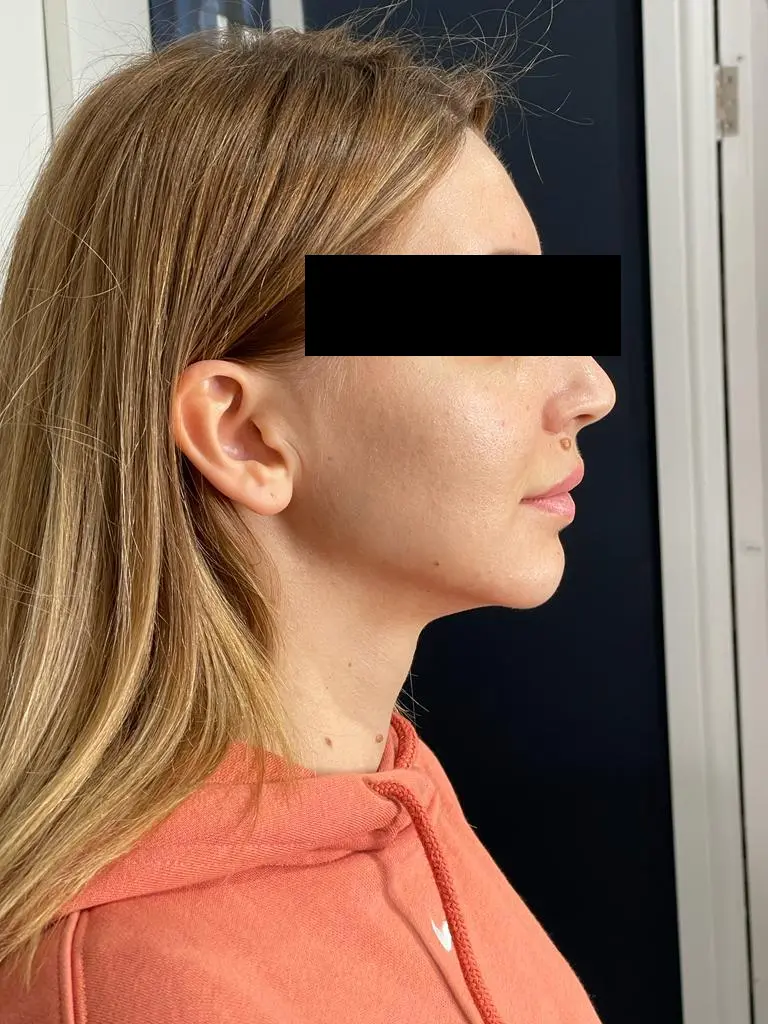
What pillow face actually is
Pillow face is not a medical diagnosis. It is a casual term from social media. It describes a face that has had too much dermal filler.
This is usually in the cheeks. It can also be around the mouth, jawline, or under the eyes.
The visual is fairly specific:
- The cheeks look full or rounded even when the face is at rest.
- The natural shadows that sit just below the cheekbones, the ones that give a face its structure and dimension - start to disappear.
- Smiles can begin to feel restricted or look slightly different on camera. In its more pronounced form, the face takes on a kind of waxy, soft quality. Hence the name.
You have likely seen the term used in reference to celebrities. It has resonated because most people recognise the look, even if they cannot explain what seems off.
The important thing to know is this: pillow face is not the fault of dermal filler itself. Used well, in moderate amounts, by a skilled clinician who is reading the whole face, fillers are a remarkable tool. Pillow face is the result of how filler is used, not what it is.
What causes pillow face from fillers
There are five main reasons it happens. Most patients with pillow face have had more than one of these working against them.
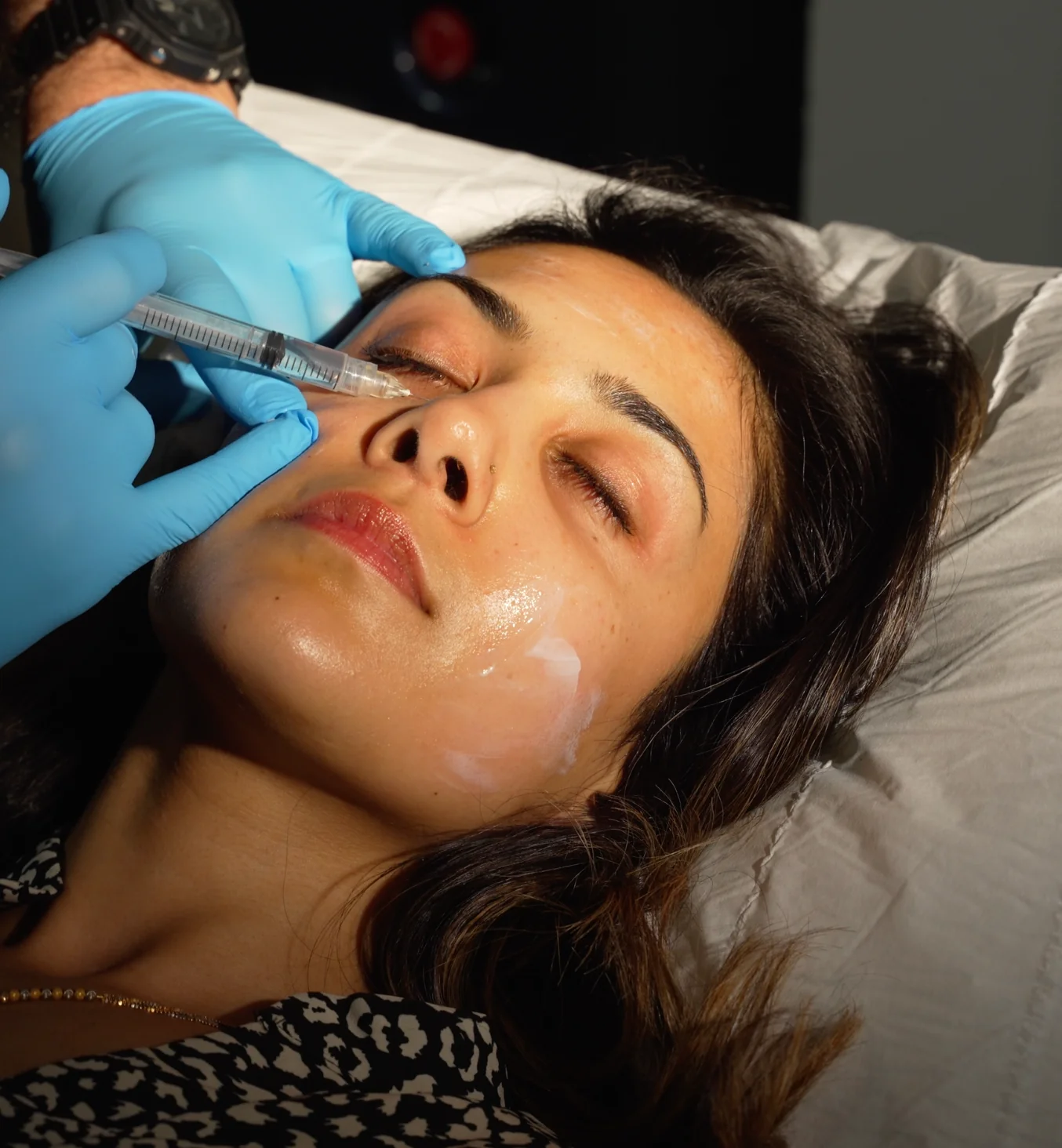
1. Too much filler.
The simplest cause. Cheek augmentation in particular is often treated as a "more is more" area. A small amount of filler can subtly restore lost structure.
Using two or three times that amount can change the face shape. It may look wrong, even if each part looks fine on its own.
2. Poor placement.
Filler should sit in specific tissue layers. It goes deep near bone for support. It can also go closer to the surface for fine adjustments.
Placing it correctly requires a working understanding of facial anatomy. When it is put in the wrong plane, it can sit too high, look lumpy, or migrate over time.
3. Repeated top-ups.
This is the one most patients do not realise. Hyaluronic acid filler does not dissolve as fast as many people think. Many products last 12 to 18 months in the tissue. Some last even longer.
If you have been having "top-ups" every six months for several years, you may have considerably more filler in your face than you realise.
4. Treating one feature without looking at the whole face.
A patient comes in wanting under-eye filler. The clinician treats only that area. But the under-eye hollow was actually caused by volume loss in the upper cheek, so the under-eye work has to keep being increased to chase a problem that is coming from somewhere else.
Repeat this across multiple areas, and you build a face that has been treated feature by feature without anyone looking at the whole.
5. Hyaluronic acid attracting water.
This is the clinical point most articles skip. HA-based fillers are hydrophilic so they hold onto water. In some patients, particularly over time, this can mean the filler appears more pronounced months later than it did initially. The fix is not usually more filler. It is review and, sometimes, dissolving.
Why some filler starts to look puffy over time
A version of this point is worth its own section, because it surprises patients. You can have a filler treatment that looks completely natural for six months, and then start looking puffier than expected after that.
A few things can be happening. The product may be absorbing water cyclically. Lymphatic drainage in the area may be slightly disrupted, leading to subtle ongoing swelling. Repeated treatments in the same area can lead to gradual tissue changes that are not immediately visible.
This is why a good clinic does not just look at the result on the day. They want to see you at six weeks.
They want to see you at six months. They want to know if anything has changed over a year. Not because anything has gone wrong, but because ongoing monitoring is how you catch the early signs of pillow face before it becomes obvious.
Signs your filler may be overdone
If you are wondering whether you might be tipping into pillow face territory, here is a practical checklist:
- Your cheeks look fuller in photographs than they used to, even when you are not smiling
- Your smile feels slightly stiff, or your face moves less than it used to or lip filler has migrated
- The natural shadows under your cheekbones have disappeared
- Friends or family have made comments, often softened ("you look really refreshed") but you can tell they have noticed something
- You are starting to recognise yourself less in photographs than in the mirror
- You feel a sense of "heaviness" or pressure in your face that was not there before
None of these things alone are diagnostic. But if you are recognising more than one or two, it is worth seeking a proper assessment.
How to avoid pillow face: the doctor-led prevention process
This is where good clinics separate themselves from average ones. To avoid pillow face reliably, you need more than a single clever technique, you need a process.
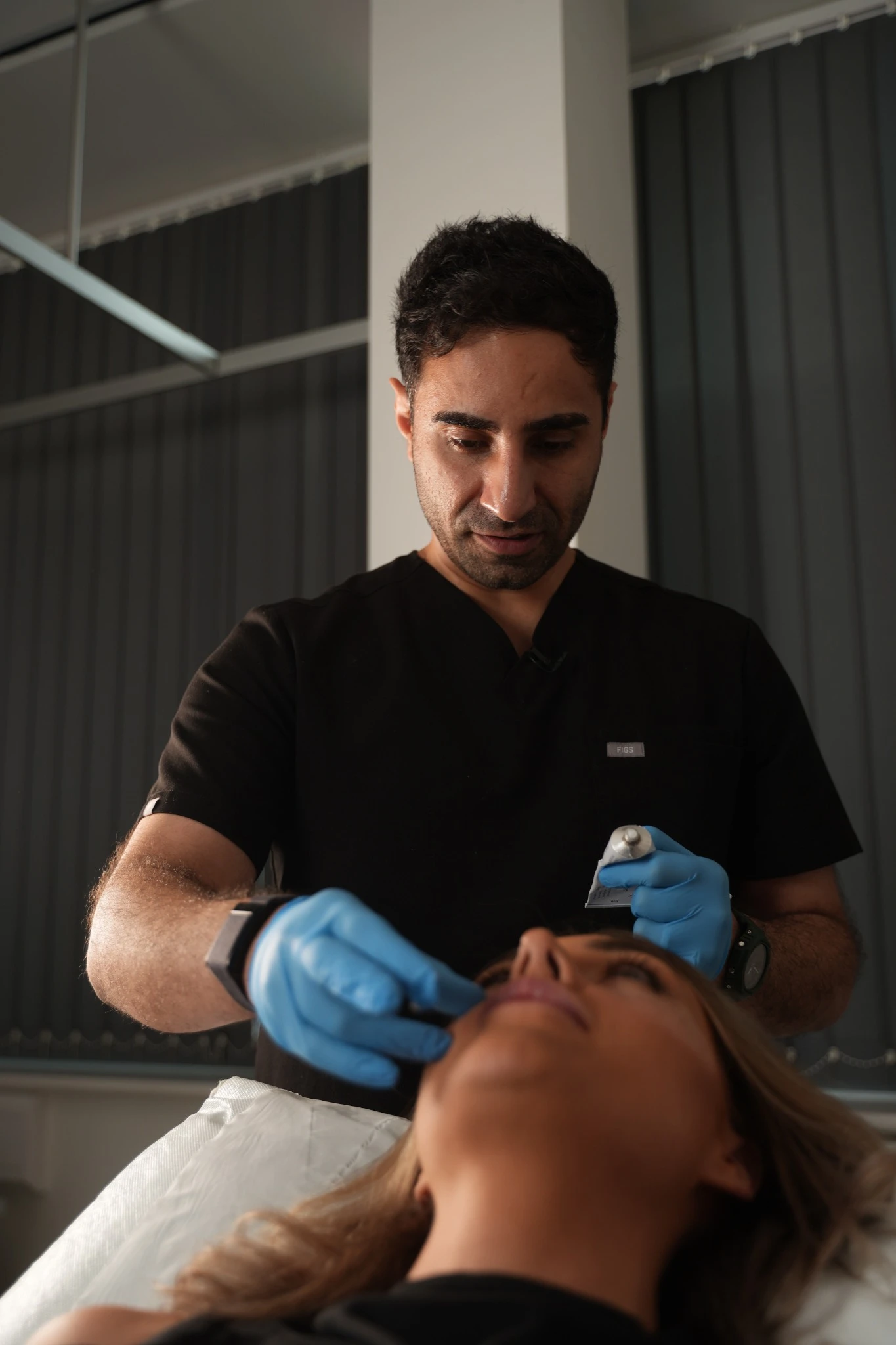
At Skinfinity, the way we work with subtle filler in Leeds is built around six principles.
Cap volumes for first-time patients
No-one needs aggressive treatment at their first appointment. We use the minimum effective dose and review at six weeks. You can always come back for more. You cannot easily take it away.
Full-face assessment before treating any area
Even if you have come in specifically about your lips or under-eyes, we look at the whole face. Often the right answer involves treating a different area first — or not treating today at all.
Staged, not stacked
Treatments are spaced. We resist the temptation to combine multiple syringes in one visit just because it is convenient. A series of small adjustments over months looks better than one larger correction.
An honest "no" when filler is not right
If what you are describing is a skin quality issue, or volume loss that would be better addressed with collagen-stimulating treatment, we will tell you. If treatment is not appropriate at all, we will tell you that too.
Working with facial anatomy, not against it
Every face has its own structural starting point. Treatment is designed to respect that anatomy, not to flatten it into a single ideal.
Built-in review appointments
Six weeks after any meaningful treatment, we want to see what your face looks like once swelling has fully settled, and to decide together if anything needs adjusting.
It is worth saying clearly: this is a slower way of working than some clinics offer. You will not leave your first appointment with a transformed face. What you will leave with is a plan, written down, that you can stop at any point.
If you want to see how this approach looks in practice, Dr Rashid explains it in detail in our Natural Results in Leeds video, and you can read more about the treatments themselves on our lip fillers in Leeds page.
What to do if you already feel overfilled
If you are reading this because you suspect you have already crossed into pillow-face territory, the honest answer is: do not panic, but get a proper assessment.
You have three broad options.
- Wait it out. Hyaluronic acid filler, in the vast majority of cases, breaks down naturally over time. Most products are largely gone within 12 to 18 months. If your treatment was modest and recent, simply pausing further treatment and letting the existing filler dissolve naturally is often the right move.
- Hyaluronidase dissolving. This is an injectable enzyme that breaks down HA filler within hours to days. It is an option when you want to act sooner. It needs to be done by a qualified clinician who understands both the dose and the implications — including that hyaluronidase can also affect your face's own natural HA, which means temporary swelling and a period of looking deflated before things settle.
- Medical opinion. If you are concerned about lumps, asymmetry, vascular issues, or anything beyond cosmetic appearance, see a doctor. Not all "pillow face" is purely aesthetic — occasionally there are clinical issues that need proper diagnosis.
What we would urge you to avoid is the instinct to "fix" overfilling with more treatment elsewhere. Chasing one area with another rarely works. Patience and proper assessment usually win.
When filler is not the answer
One of the conversations we have most often with patients at consultation is whether filler is actually the right treatment at all.
- If the issue is skin quality so fine lines, lack of glow, crepey texture. Then a collagen-stimulating treatment like Sunekos, Julaine or Polynucleotides will do more than filler ever could.
- If the issue is structural volume loss, especially in the mid-face, Julaine may be a better long-term option. We use it as part of staged rejuvenation. It is a collagen-stimulating filler. It may last longer than repeat HA filler top-ups.
- If the issue is fine lines around the eyes or forehead, anti-wrinkle injections, used conservatively, may achieve more than filler in that area.
- And sometimes the right answer is no treatment yet. Good skincare. Sun protection. Time. The next consultation in a year, when something has actually changed.
This matters for pillow face because the look usually comes from filler used in the wrong place. It can also happen when another option would have worked better.
A note on celebrity pillow face
You may have seen the trend by now. High-profile public figures seem to have dissolved their filler. They have returned to a more natural look.
Whatever the specifics in any individual case, the cultural shift is real. The "Instagram face" era of overfilled, hyperreal aesthetics is being actively rejected by the audiences it was originally aimed at.
What we would take from this is simpler than it sounds. Even the people with the most expensive access to the best clinicians in the world can end up overfilled.
It is not a question of money or status - it is a question of approach.
The clinics that produce natural-looking long-term results are the ones with the discipline to do less, not the ones with the most treatments on the menu.
Frequently asked questions
What is pillow face?
Pillow face is a colloquial term — not a medical diagnosis — for the appearance of a face that has had too much dermal filler. It is characterised by full-looking cheeks at rest, loss of natural facial shadows, and a slightly waxy or soft appearance. It is almost always avoidable.
Can Botox cause pillow face?
No. Anti-wrinkle injections (often referred to by the brand name Botox) and dermal fillers are different treatments. Anti-wrinkle injections relax muscles to soften lines, and do not add volume. Pillow face is caused by dermal filler, particularly when overused or poorly placed.
How do I know if I have pillow face?
Look for full-looking cheeks even at rest. Notice loss of the natural shadow under your cheekbone. Watch for limited movement when you smile. You may also feel a sense of heaviness in your face. If friends and family have commented that something looks different, that is also a useful signal. A proper assessment by a qualified clinician is the only definitive way to know.
Can pillow face be reversed?
In most cases, yes. Hyaluronic acid filler naturally dissolves over 12 to 18 months, and can be actively dissolved earlier with hyaluronidase. Both options need proper clinical assessment. Non-HA fillers can take longer to resolve, and the options depend on the product used.
How much filler is too much?
There is no single answer. It depends on the patient’s face, the treated area, and their total history of prior treatments.
The signal that you are approaching "too much" is not a volume number, it is a visual one: the face starts to look full at rest and lose its natural shadows. A good clinic will tell you when to stop.
How do I find a filler clinic that will not overdo it?
Ask about their approach to first-time patients. Ask whether they cap volumes. Ask whether they assess the whole face or only the area you came in about.
Ask about their follow-up policy. A clinic that discusses staged treatment, review visits, and the option to do less is set up to prevent pillow face. It does not just respond to it.
It is for general information and is not a substitute for individual medical advice. Skinfinity is CQC-registered and based within LivingCare Group Private Hospital, Thorpe Park, Leeds. To book a consultation with Dr Rashid, please contact the clinic.
About the author

Dr Mahmoon Rashid, MBChB
Doctor and Clinical Lead, Skinfinity Cosmetic Clinic
Dr Mahmoon Rashid is a qualified doctor and Clinical Lead at Skinfinity Cosmetic Clinic in Leeds, where every treatment is doctor-led. His focus is regenerative, skin-quality treatments, including Sunekos, polynucleotides, Julaine and chemical peels, alongside OBSERV-led skin assessment and structured collagen-banking plans.
He treats at Skinfinity's CQC-registered clinic within LivingCare Group Private Hospital at Thorpe Park, Leeds.
Meet Dr Mahmoon