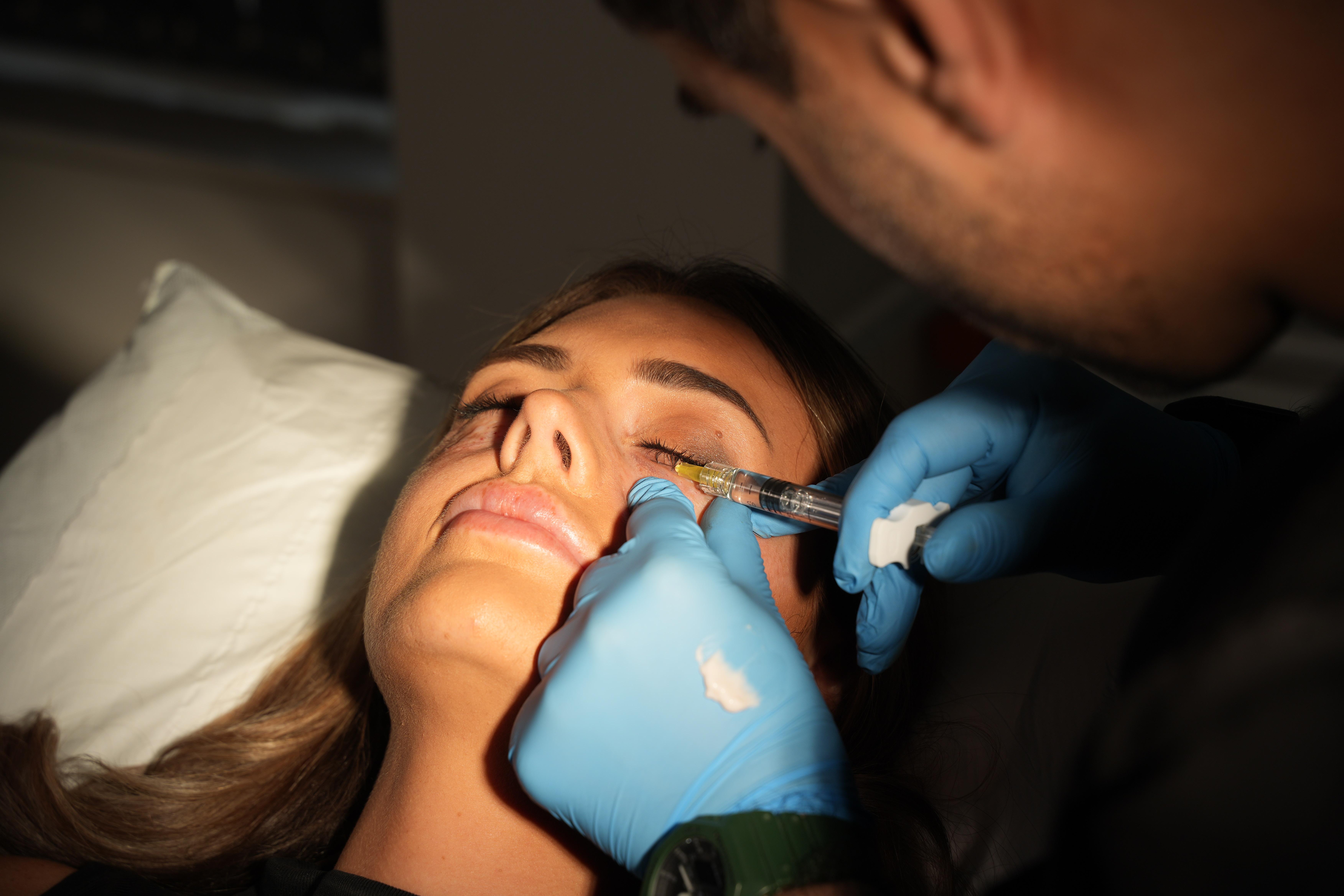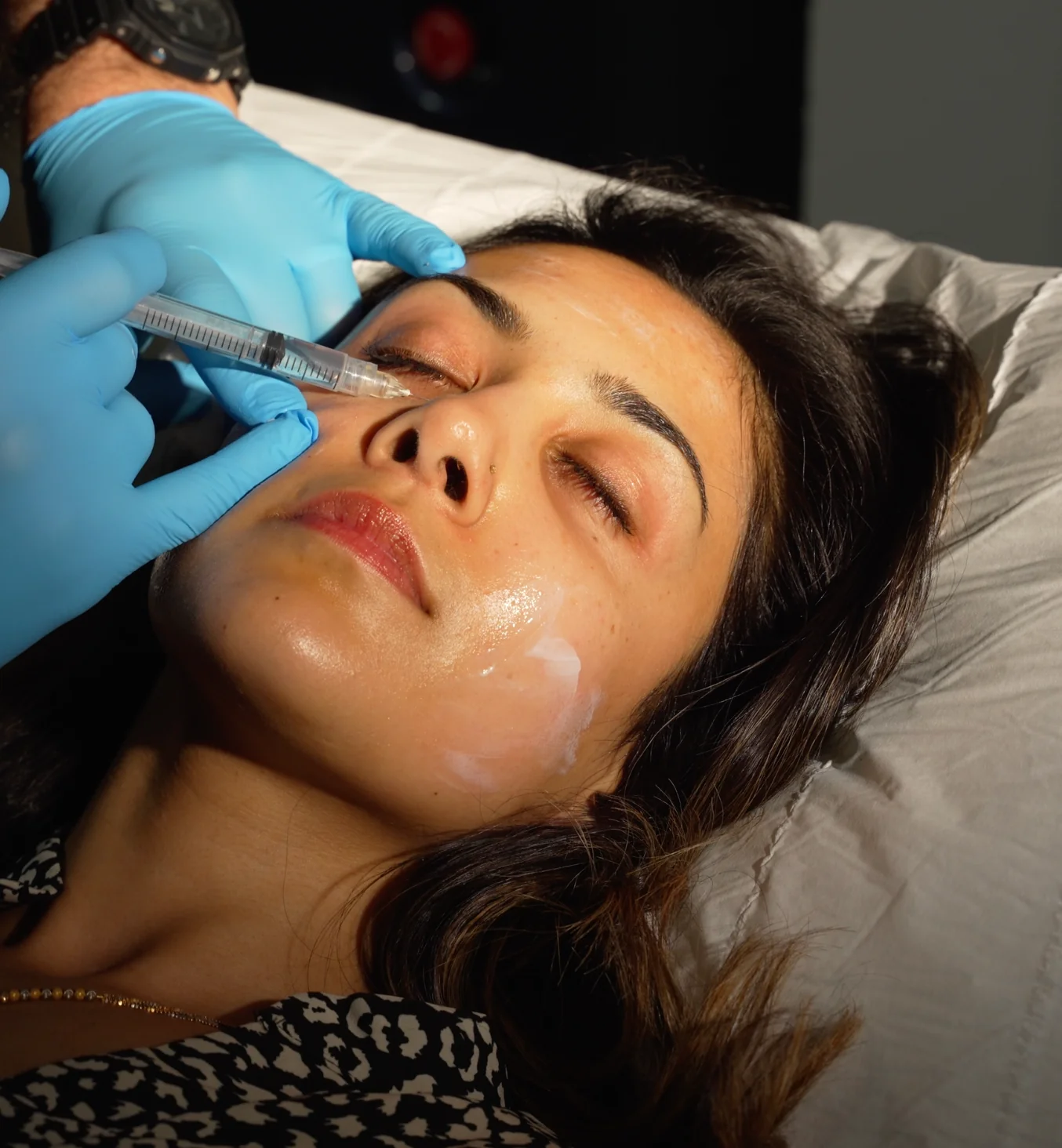
Non-Surgical Nose Job in Leeds: The Questions to Ask Before Anyone Injects Your Nose
The appointment is usually quick. Most take fifteen to thirty minutes. You can often leave the clinic the same morning.
But quick does not mean low risk.
The nose is the riskiest place on the face to inject filler. That is not marketing language. It is what the evidence shows.
This guide explains what can go wrong, what you should ask before treatment, and why the person holding the needle matters.
It is not here to scare you. It is here to help you make a proper decision.
Is a non-surgical nose job safe?
Not without qualification, no.
The biggest review so far looked at 8,604 patients. Around 2.52% had a complication of some kind. Most were minor. Roughly 0.35% had a blocked blood vessel and roughly 0.09% lost some vision.
Your level of risk depends heavily on who treats you. It also depends on what they do if something goes wrong.
Most complications were minor. Bruising was the most common, at roughly 1.58%. That is usually temporary.
But the rare complications are the serious ones!
A blocked blood vessel can damage the skin on the nose. In a small number of cases, it can affect sight.
The researchers concluded that the treatment “is safe with low rates of complications”. That matters, and it should be said.
But they also said serious problems “can occur.”
That is the honest position.
The risk is low. The consequence can be high.
So the question is not just, “Is it safe?” The better question is, “Who is treating me, and what happens if there is a problem?”
Our non-surgical rhinoplasty page explains how we assess and plan the treatment.
Why is the nose riskier than lips or cheeks?
Because of the blood supply.
The nose has several small arteries in a very small space. These vessels connect back to the arteries that supply the eye.
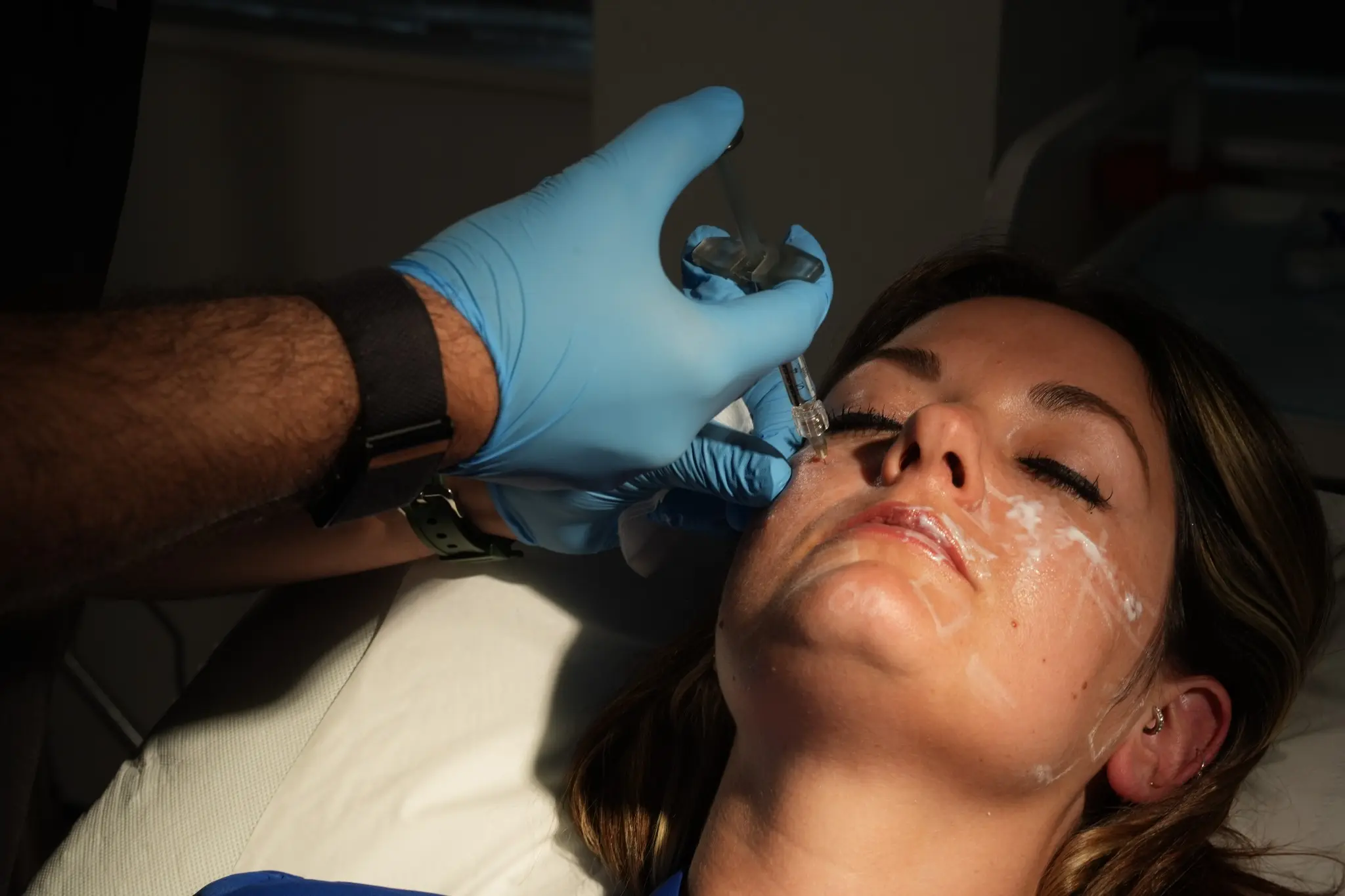
A 2019 review of filler cases that caused sight loss found the nose was the injection site involved most often, in roughly 56% of the cases it reviewed.
Here is the plain version.
Filler is injected under pressure. If it enters an artery instead of sitting beside it, it can move backwards through that artery. In the nose, those arteries connect towards the eye.
That is why nose filler is different from many other filler treatments.
It may look similar from the treatment chair. Clinically, it is not.
The 2019 review looked at 48 new cases of partial or total sight loss reported between January 2015 and September 2018. Of those, the nose accounted for around 56.3%. The area between the brows came second, at around 27.1%.
That order used to be the other way round. As nose filler became more popular, the nose moved to the top of the list. This is not about panic. It is about allowing patients to make safe decisions.
It is true in every clinic, on every nose.
Can nose filler make my nose smaller?
No - Filler adds gel to the nose. It cannot take anything away.
It can hide a bump by building up the bridge around it. It can lift a tip that droops. It can also improve symmetry.
But if you want a genuinely smaller nose, that is a surgical question.
This is one of the most common misunderstandings we see in clinic.
Filler is an addition. It does not remove bone, cartilage, skin or soft tissue.
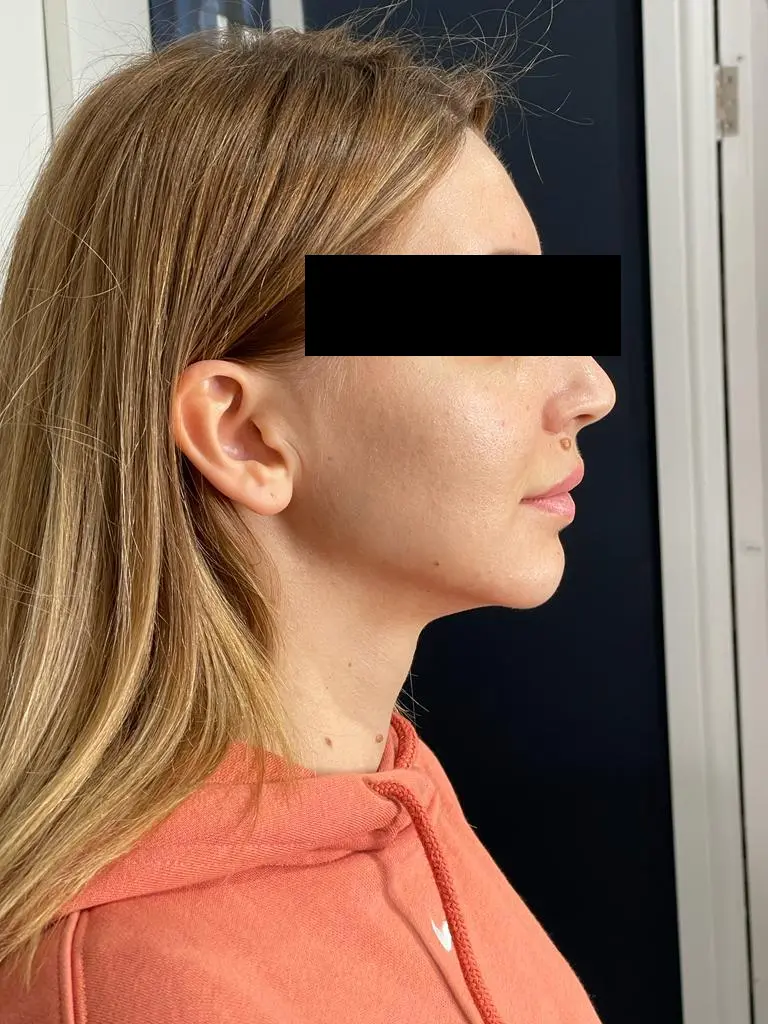
What it can do is change how the nose looks from the side. If filler is placed above and below a bump, the bridge can look straighter in profile. If the tip drops when you smile, filler can sometimes support it.
That can make the nose look more balanced.
But it is still adding volume.
It cannot narrow a wide nose. It cannot make the whole nose smaller. It cannot improve breathing.
Nose filler is not a replacement for surgery in every case. Sometimes surgery is the more honest answer. Sometimes no treatment is the right answer.
If that is our view, we will say so.
How long does it last, and can it be undone?
Not forever.
The dermal fillers used at Skinfinity give roughly 12 to 18 months. This depends on the product used and your own metabolism.
Hyaluronic acid filler can also be dissolved with a prescription-only enzyme. That only helps if your clinic keeps it available and can use it the same day.
For how long filler lasts across the rest of the face, we have covered that separately in how long do fillers last.
For nose filler, reversibility matters.
Clinics often say filler is dissolvable. That is true. But it is only reassuring if they can act when you need them to.
The dissolving agent is a prescription-only medicine. This means someone with prescribing rights has to be involved.
“We can dissolve it” is not the same as “we can dissolve it today.”
Ask which one applies.
What actually happens if it goes wrong?
The emergency is a blocked blood vessel.
The warning signs can include pain that feels much worse than it should, skin that turns white or dusky, and any change to vision.
Published guidance says this should be treated straight away, not the next day.
Ask any clinic what its plan is. Also ask who you would call out of hours.
From the patient side, you may notice pain that is much worse than the injection itself and does not settle. The skin may look pale, blotchy or greyish. Sometimes the change spreads beyond the injection point.
Later signs can include blistering or crusting.
Do not sleep on it.
Call the clinic straight away.
Anything involving the eyes is different again. Blurred vision, a dark patch, loss of sight in one eye or sudden pain behind the eye is an emergency. You need urgent eye care, not a wait-and-see approach.
The professional guidance is clear. If a blocked vessel is suspected, it is treated urgently.
We are not printing the protocol here. It is a clinical document, not patient instructions.
But it leads to one useful question:
“If something goes wrong at 8pm on a Saturday, who do I ring, and what will they do?”
A prepared clinic will answer clearly.
An unprepared clinic will not.
Source: Aesthetic Complications Expert Group guidance.
Who’s actually allowed to inject my nose?
As of August 2026, there is no law in England restricting this treatment to doctors, dentists or nurses.
The Government has consulted on a licensing scheme. The proposed highest-risk tier would be limited to registered healthcare professionals working in CQC-registered premises.
That scheme has not started yet. This surprises many people, so it is worth saying plainly.
Right now, in England, the law does not stop someone without medical registration from injecting filler into your nose!
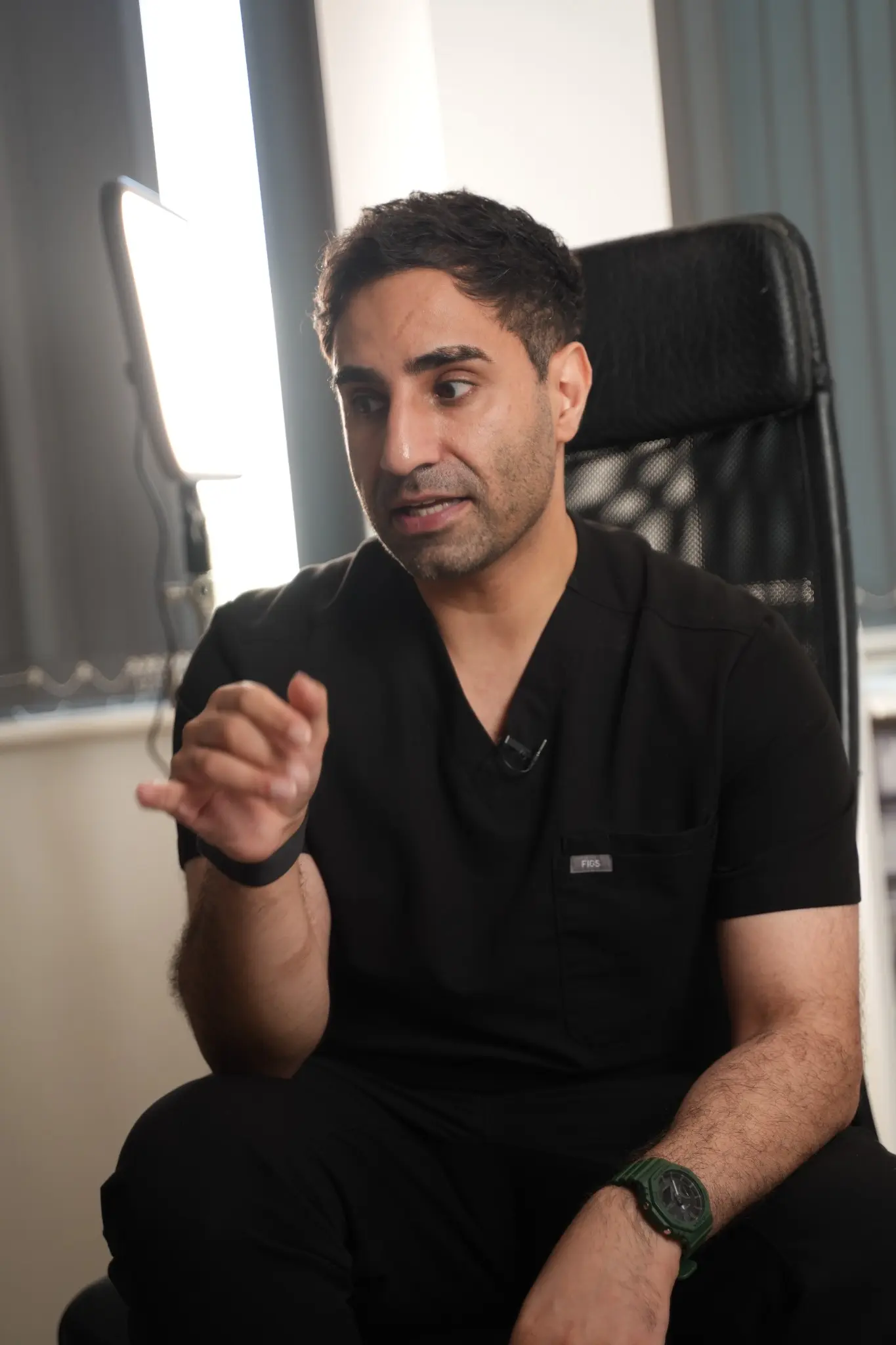
The Government published its plans in August 2025. The proposal includes three tiers. The top tier would be limited to registered healthcare professionals in CQC-registered premises.
The official briefing does not say which tier nose filler would sit in. So we will not guess.
Until the scheme starts, you need to check who is treating you.
Start here:
- GMC register, for doctors
- GDC register, for dentists
- NMC register, for nurses
Search your injector’s name.
If they are not on any of these registers, they are not a registered healthcare professional.
That may be legal today. It does not mean it is the level of clinical training and accountability you want for this treatment.
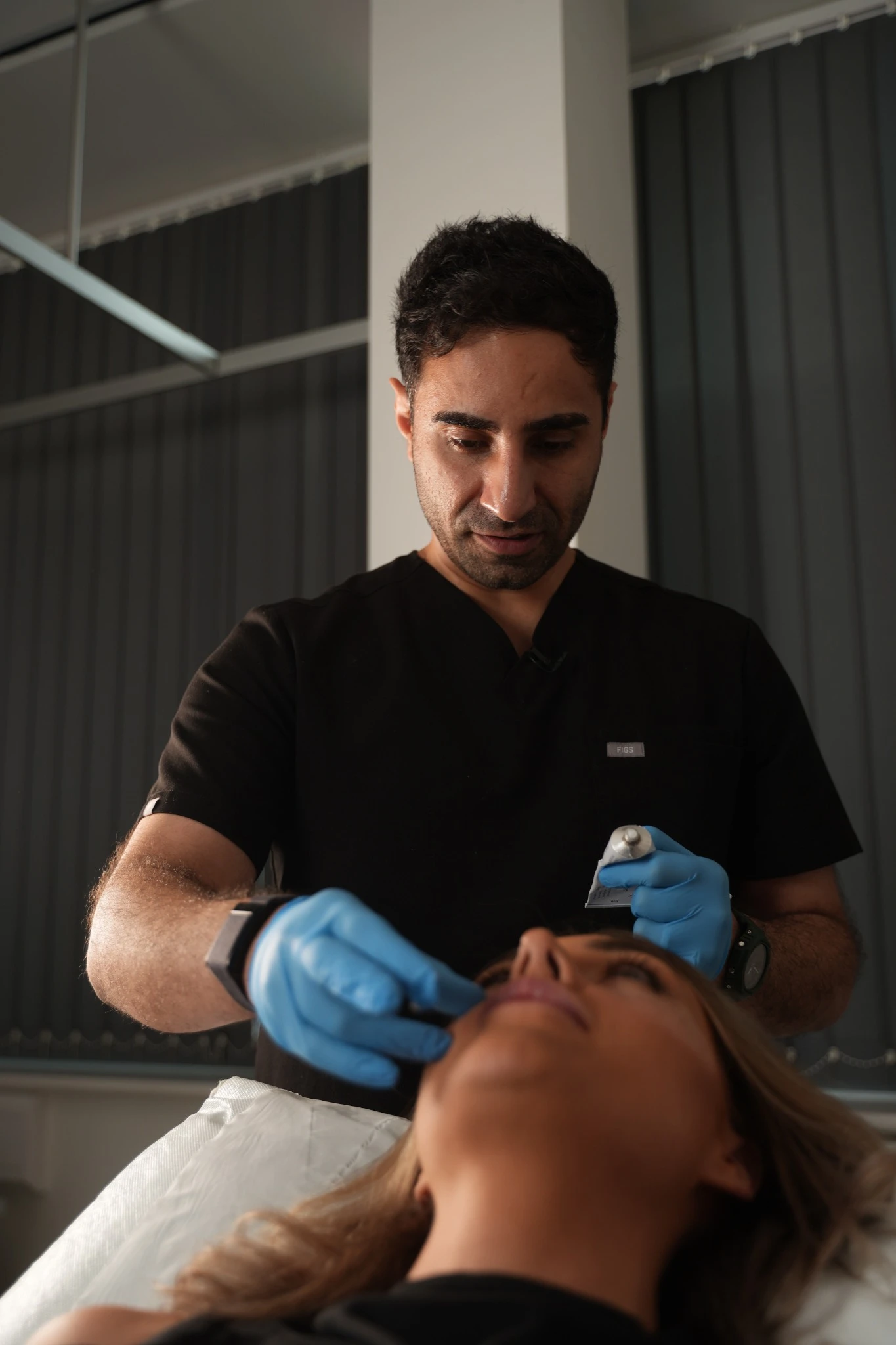
Skinfinity is CQC-registered and our injectors are doctors or dentists. We explain what that means day to day in what makes Skinfinity different, and you can read about our clinicians on the about page.
Does it matter if I’ve had a nose job before?
Yes - It can matter more than people expect.
Surgery leaves scar tissue. Scar tissue can change how the tissue behaves and where the blood vessels sit. This can raise the risk of a blockage or damage to the skin.
Tell your clinician about any previous nose surgery or injury before your assessment, not after.
Scar tissue causes two main problems. It does not stretch like normal tissue. It can also mean the arteries are not where they would usually be.
The same applies to a broken nose, a septoplasty or old filler that may not have fully resolved.
Mention it at the start, patients often assume it is not relevant - It is!
In some cases, it can change the answer completely.
Is there a minimum age?
Yes. The minimum age is 18.
Since October 2021, it has been against the law in England to give cosmetic filler to anyone under 18.
Skinfinity treats adults only.
Any clinic should check your age before treating you.
This is law, not opinion. The 2021 legislation restricting cosmetic injectables for under-18s made it a criminal offence in England. Parental consent makes no difference.
Nose filler is one of the treatments where demand from under-18s is more visible. That is why we would rather say this clearly than hide it in a footer.
If a clinic does not check your age, that tells you something about the rest of its process.
What does it cost in Leeds?
Skinfinity charges £595, plus a separate £50 consultation. Prices around Leeds vary a lot. A low headline price often means less product, less assessment time or a less experienced injector.
Compare what is included, not just the number.
Our full pricing is published, and the treatment page sets out what the appointment involves.
Two prices are not comparable unless you know what sits behind them.
Ask what you are getting. How long is the assessment? How much product is included? Is a review appointment included?
Also ask the question most people miss:
“If something goes wrong, do I get charged to fix it?”
A lower price may mean a five-minute assessment. It may mean weaker complication cover. It may mean there is no dissolving agent available on site.
That has not saved you money.
It has moved the cost to the point where you only discover it if something goes wrong.
If you are weighing up non-surgical options more generally, our post on the non-surgical face lift in Leeds covers the rest of the face.
Frequently asked questions
Does it hurt?
Most people find it uncomfortable rather than painful. Numbing cream is applied first, and most fillers contain a local anaesthetic. The tip of the nose is usually the most sensitive part. It's short, the injecting itself takes a few minutes.
How swollen will I be, and when will I see the real result?
Expect some swelling, redness or bruising for the first couple of days. It usually settles within a week or two, and that's when you're seeing the actual result. Don't judge your nose on day one.
What should I avoid afterwards?
Leave it alone - no pressing or massaging the area. Skip make-up for 24 hours, and give hard exercise, saunas and steam rooms a couple of days. Glasses resting on a treated bridge are worth asking us about before you book. We'll give you full aftercare in writing.
Can it help a wide nose or a bulbous tip?
Sometimes, but manage your expectations. Filler can't narrow anything or reduce bulk. What it can do is build height in the bridge, which changes the proportions and can make a wide nose look narrower from the front. For a genuinely bulbous tip, filler often isn't the answer, and we'll tell you that at assessment rather than after.
Is nose filler permanent?
No, and that's deliberate. We use hyaluronic acid filler, which breaks down over time and can be dissolved if needed. Permanent and semi-permanent fillers exist, but they can't be reversed. In an area with this much risk, being able to undo the treatment matters more than making it last longer.
What sort of filler do you use?
A hyaluronic acid gel chosen for the nose specifically. Nose filler needs a firmer product that holds its shape and stays where it's put, rather than the softer gels used in lips. Your clinician will tell you exactly what they're using and why before anything happens.
Can I have this if I'm pregnant or breastfeeding?
No. We don't treat during pregnancy or breastfeeding. It's a precaution rather than a known problem, these treatments simply aren't tested in pregnancy, so we wait.
Can I combine it with other treatments?
Often, yes - chin or cheek filler is a common pairing, because the nose is judged in proportion to the rest of the face. Whether that's right for you is an assessment question, not an add-on. We'd rather do less and get the balance right.
Bring these questions with you
A good consultation should give you time to think.
You should be able to ask questions. You should know who is treating you. You should understand the main risks before you consent.
A consultation at Skinfinity is £50. You can book through our online booking or call 0113 397 0980.
Ask us all of it.
Who is injecting? What product will be used? What is kept in clinic? What happens at the weekend?
We would much rather answer these questions before treatment than have you find out later.
One final point before you book.
We may tell you this treatment is not right for you. We may say surgery is the more honest answer. We may recommend no treatment.
That is not a wasted appointment.
That is what a proper medical assessment is for.
You can also get in touch with a question first.